Content Style Guide
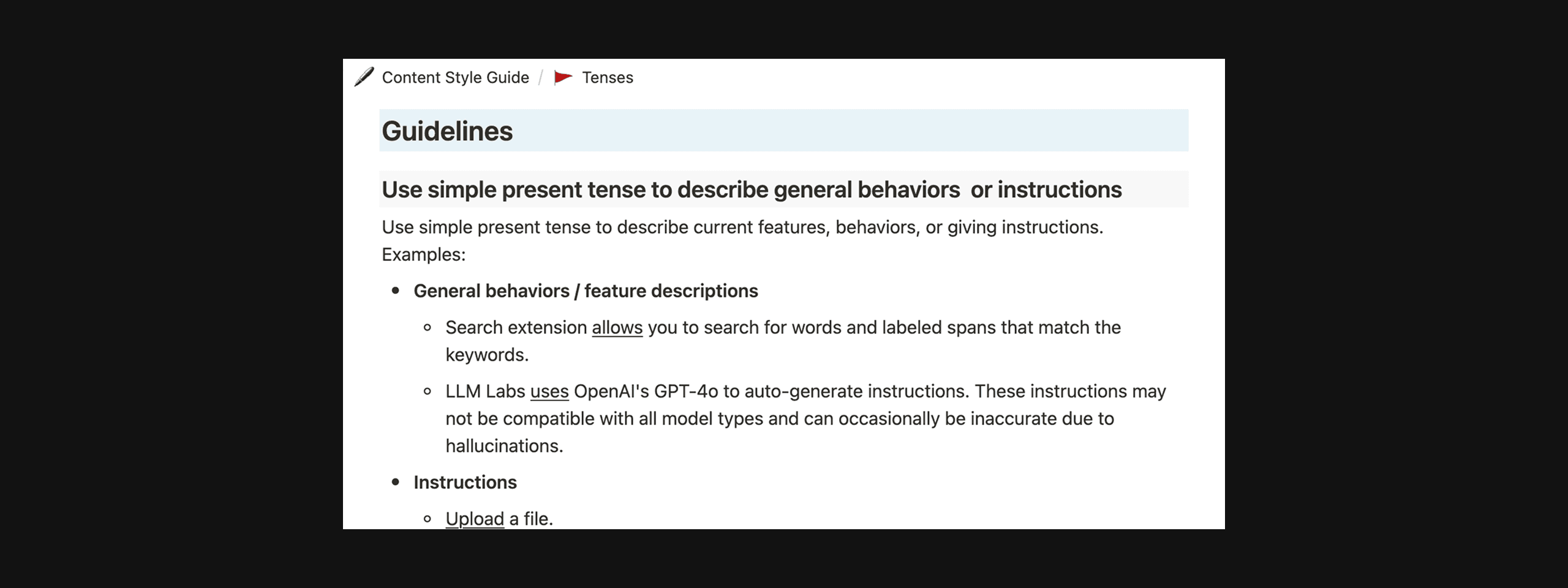
A shared content/writing standard for Datasaur, ensuring consistency in tone, terminology, and voice across every product surface (UI copy, docs, marketing) rather than each team writing ad hoc.
Company
Timeline
How I helped
Led the initiative to create Datasaur style guide and maintained a centralized glossary
Hands-on contribution
Promoted company-wide adoption of the style guide, ensuring all forms of copywriting followed the standards
52
terms defined
21
UI components standardized
3
modules impacted
01
Overview
As Datasaur scaled across design, product, and engineering, I noticed a recurring pattern during design reviews: copy was being written independently by each team, with no shared reference for tone, terminology, or grammar. Over time, this created compounding inconsistency across the product — and I proposed a company-wide content standard to address it before it grew harder to untangle.
Problems
Frequent grammar mistakes in the production copy
There were no established rules or principles for handling copywriting, which led to inconsistencies.
Inconsistent terminology causing confusion
Designers, product managers, and engineers often used different names for the same feature or function. This inconsistency carried over into documentation, where a single concept might be referred to by multiple terms, creating confusion for users and internal teams.
Duplicated or conflicting content
Different versions of the same content appeared in multiple places, leaving teams unsure which to follow.
Challenge
Language and localization
English is not the first language of our team, which led to variations in grammar, tone, and phrasing. Best practices for creating clear and consistent copy should be included in the guidelines to ensure all new content adheres to the standards, such as using LLMs or other grammar checkers to validate the text.
These inconsistencies didn't just create internal friction — they risked eroding user trust whenever documentation and in-product copy told slightly different stories, and made onboarding harder for new hires learning the product's terminology from scratch.
02
Process
Industry analysis
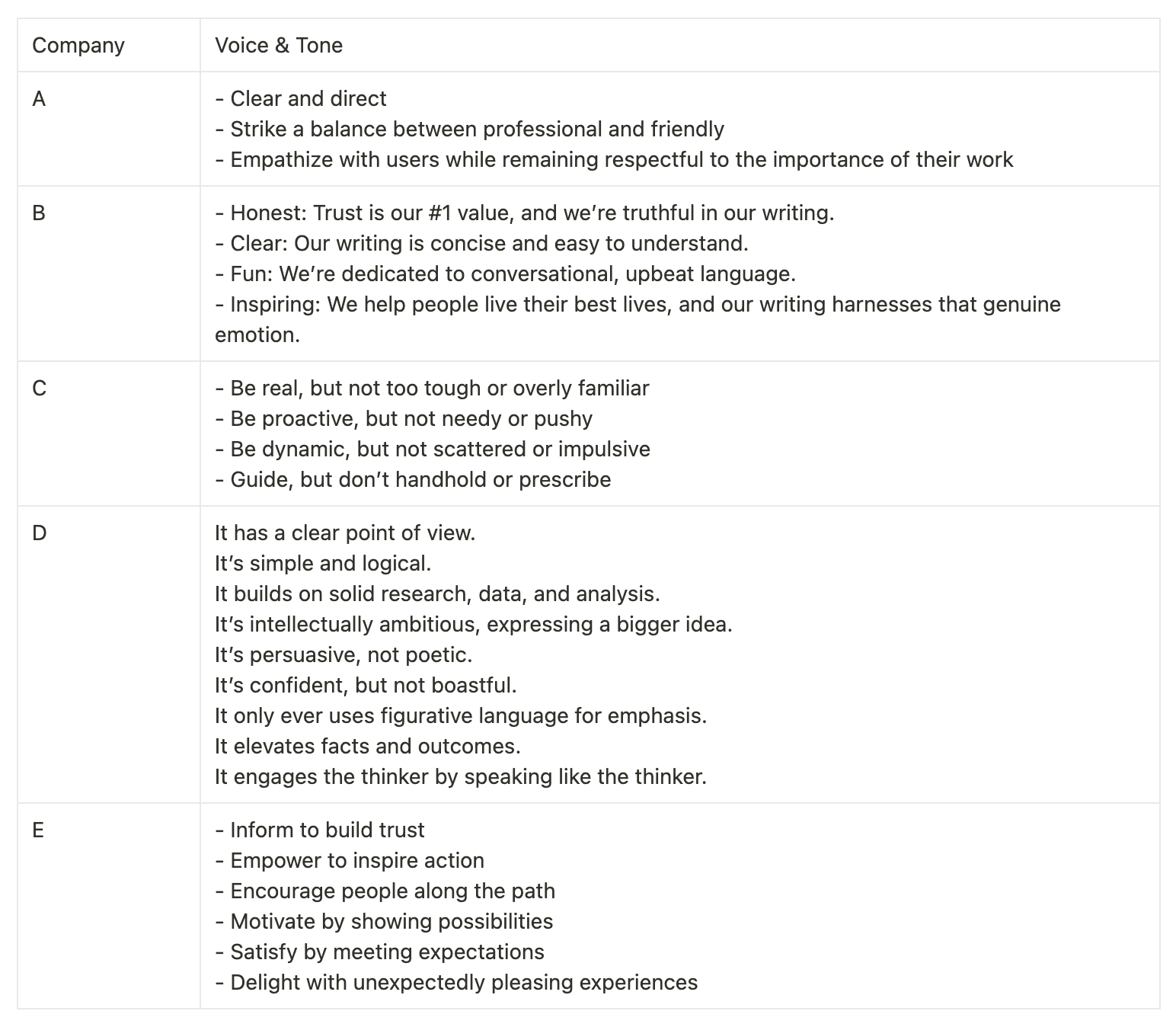
We explored how other companies structure their style guides and handle voice and tone. I led the team in analyzing the components, do’s and don’ts, and best practices across these guides. From these insights, we defined our voice and tone and created a checklist of essential items for the style guide.
Audits of existing copy
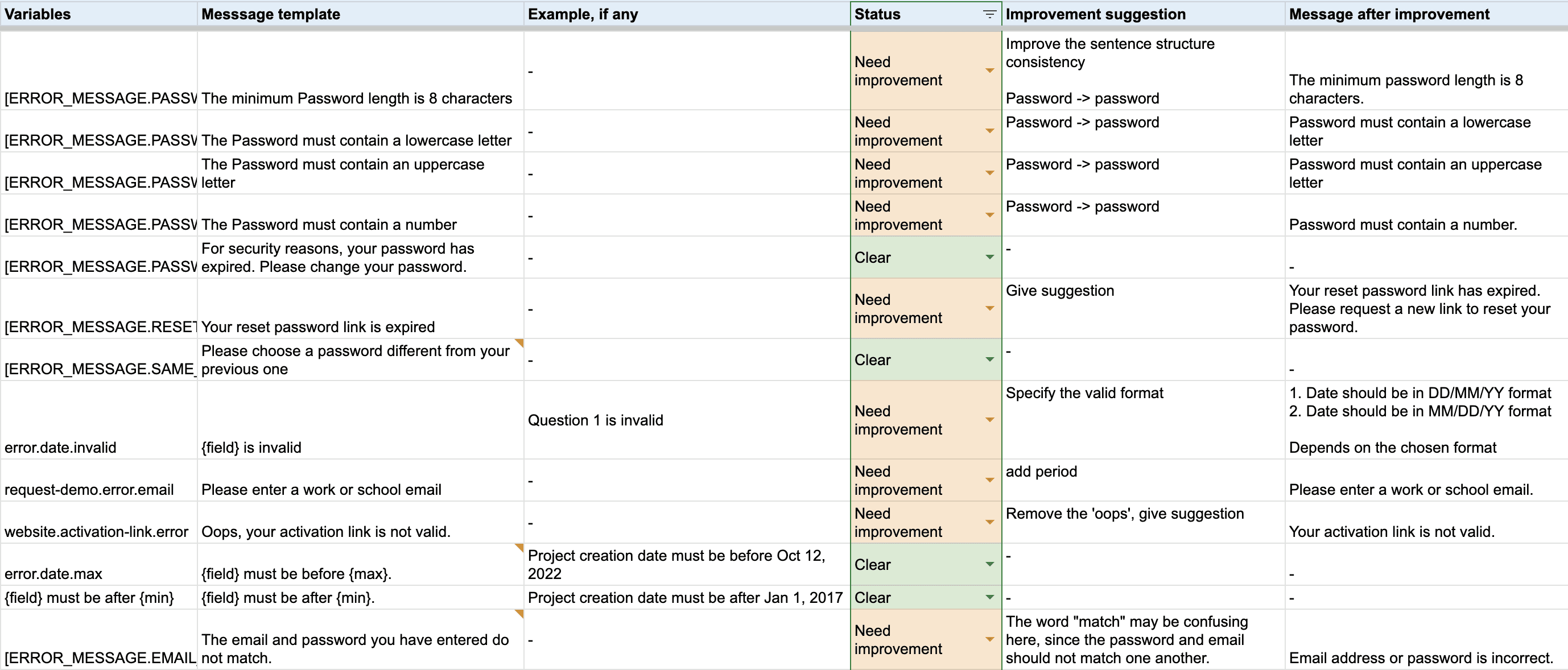
We audited over 500 pieces of existing copy across the product, including success messages, error messages, descriptions, section titles, and more. I led the team in defining a classification system and assessment criteria, categorizing each copy as clear or needing improvement. This structured approach helped us identify patterns of inconsistency and set priorities for updates.
Of the 621 pieces audited, 42% were flagged as needing revision. Analytics tooltips (79%), external links (67%), and timestamps (64%) showed the highest rates of inconsistency, though error messages represented the largest volume of flagged content — 97 out of 166 audited — making them the single highest-priority category to standardize first.
Voice and tone
The design team worked with product managers and engineering leads to align on product and feature terminology, producing a unified glossary for consistent use across the platform.
We defined four voice characteristics — Authoritative, Professional, Friendly, and Informative — balancing subject-matter confidence with approachability, so the product could speak to professionals with expertise while still feeling human rather than dry.
For grammar and terminology, we standardized on sentence case by default, with specific exceptions carved out for brand names (title case, bold), page/extension names (sentence case, bold), and general nouns (lowercase) — captured in a Vocab Library that became the single source of truth for terminology across the app.
Collaboration & validation
The design team worked with product managers and engineering leads to align on product and feature terminology, producing a unified glossary for consistent use across the platform. The broader style guide was also reviewed by other designers before becoming official, ensuring it held up across different design contexts, not just the terminology work.
Rollout & adoption
To move the guide from reference document to daily practice, we embedded it directly into existing workflows rather than relying on people to seek it out. Within the design team, it was added to the design review checklist and pinned in the Design Wiki, becoming part of new hire onboarding. Beyond design, it served as a shared reference for QA, release guidelines, and product development squads.
03
Result
Rather than a one-time fix, the guide became embedded in how the team actually works. PR reviews involving copy — even small changes that previously bypassed design entirely — now require designer review and approval, with designers able to provide corrected copy directly when needed. Designers use the checklist to self-review their own work before it goes to the copywriting PIC, catching inconsistencies earlier in the process rather than after the fact. And PMs across squads — who often maintain their own documentation, like tooltip specs in their PRDs — now bring new copy entries to designers for review and approval before shipping, rather than writing and publishing independently.
The guide's influence extended across three of Datasaur's core products — Data Studio, LLM Labs, and the Datasaur Website — standardizing terminology and tone across surfaces that previously evolved independently of one another.
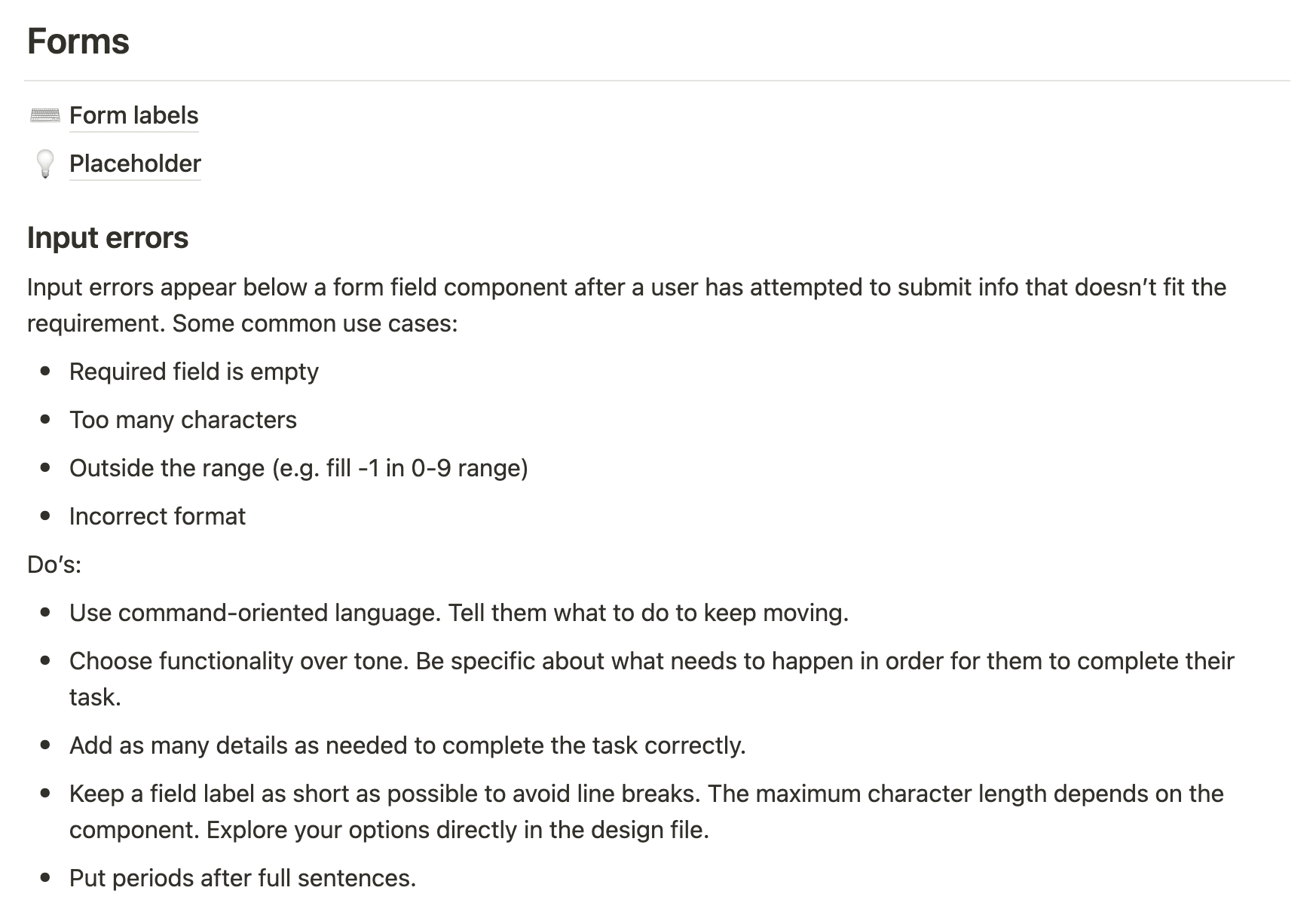
One rule from the guide addressed how form validation and input errors should read — moving away from inconsistent, ad hoc phrasing toward a standardized structure applied across every form in the product.
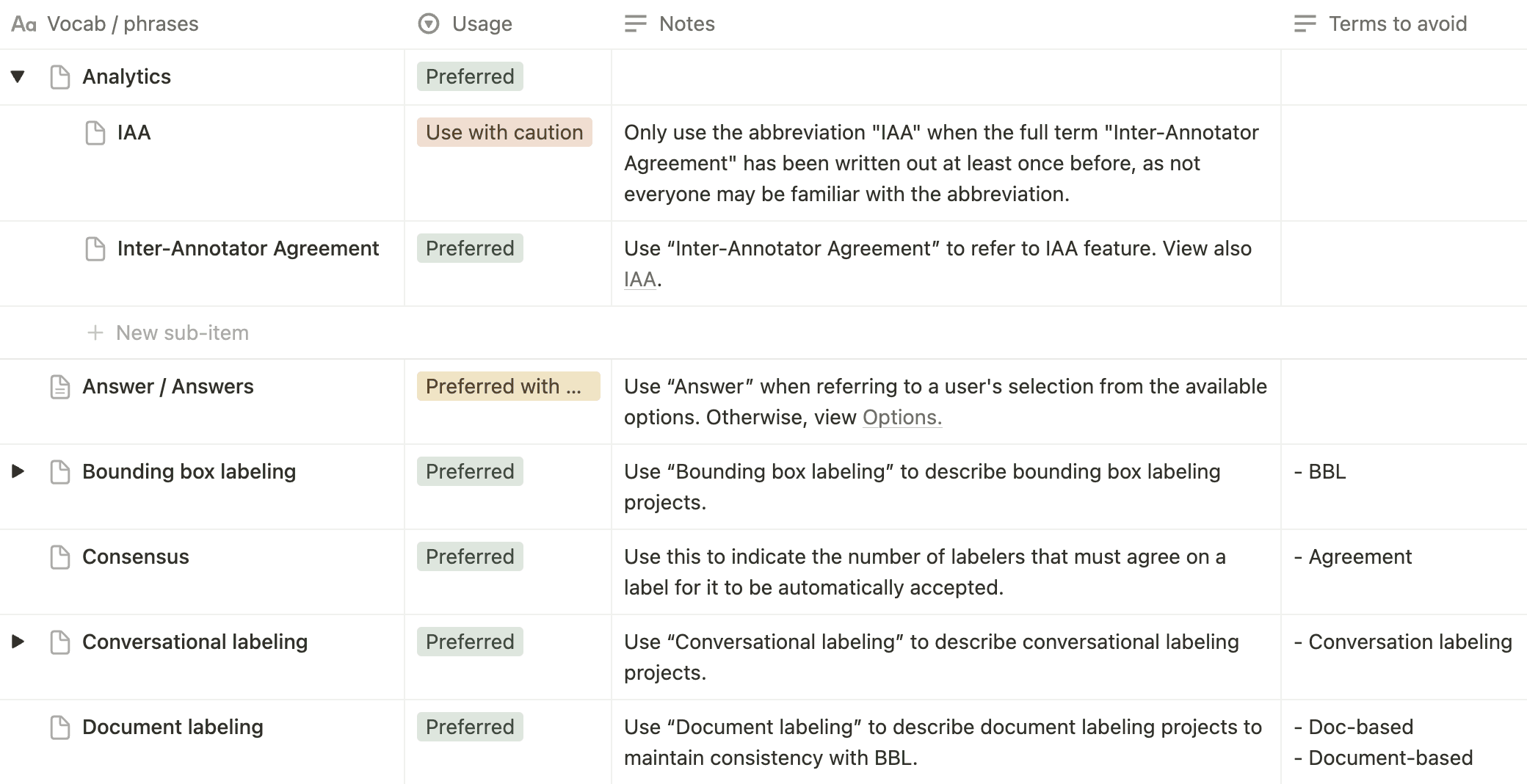
The Vocab Library became the single source of truth for terminology across the app, giving designers, PMs, and engineers a shared reference instead of relying on tribal knowledge or scattered documentation.