Volantis Data Pipeline
A platform that empowers organizations to handle large-scale data operations with ease, supporting machine learning and analytical tasks without requiring advanced technical skills.
Company
Timeline
How I helped
Conducted various research initiatives to direct the design decisions
Designed the core architecture and UI foundation
01
Overview
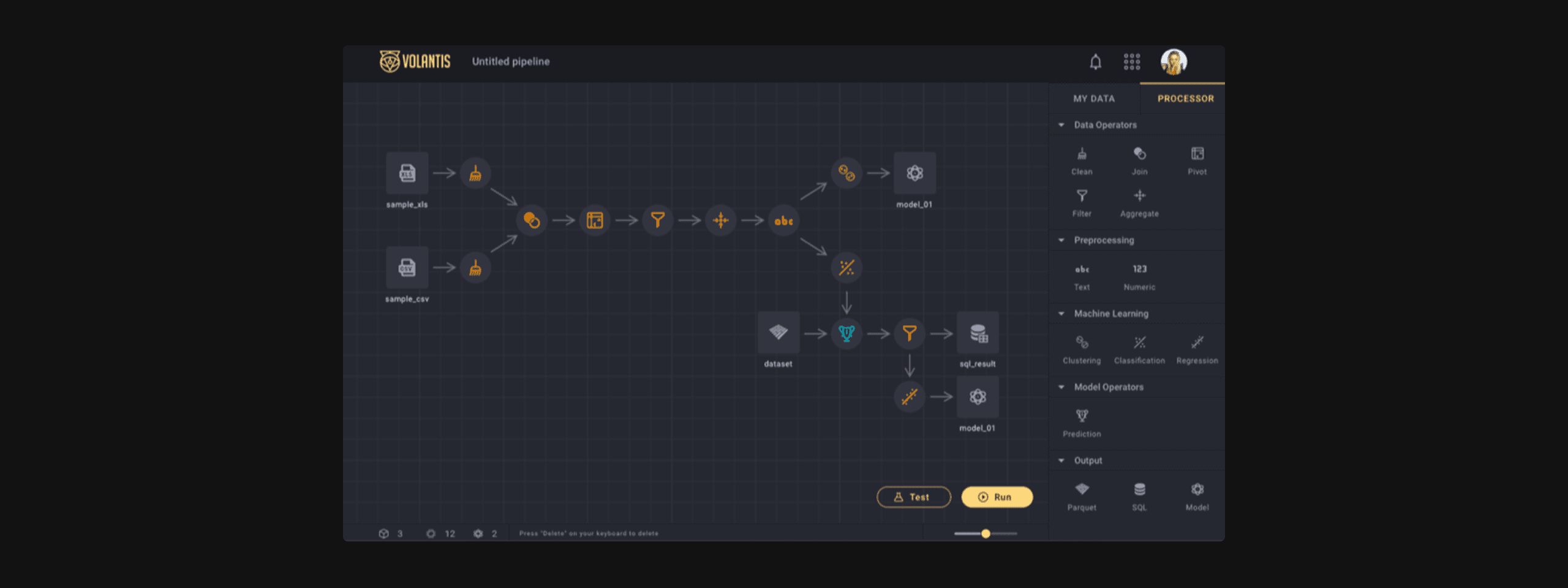
Volantis Data Pipeline was created to simplify the entire data processing workflow, from cleaning raw data and applying processors to training machine learning models. I developed user flows, sketches, and mockups, delivering the first version within two days and iterating with the Product Owner to fill missing flows. When ML Studio was merged into Data Pipeline, I redesigned user flows, sketched new concepts, and collaborated closely with stakeholders and engineering leads to align features with technical feasibility. The project ultimately delivered a more complete, integrated solution that streamlined data processing and expanded capabilities beyond the original ML Studio.
Challenges
Partial coverage of existing tools: Volantis ML Studio only addressed part of the overall data processing workflow, and Data Pipeline was closely tied to Volantis My Data for file management. This created dependencies that complicated the design and integration of new features.
Frequent changes in requirements: Stakeholders often shifted priorities, changed target users, or added new features mid-development, making it difficult to maintain a clear design direction.
Internal coordination and limited time frame: Conflicting opinions and unclear decisions on feature prioritization led to delays and challenges in aligning the team on the next steps.
02
Process
Research
Create a proto-persona
I brought together key stakeholders, including the CEO, CCO, and division heads, to gather requirements and prioritize features. With limited access to potential users, I conducted an interview with an internal data scientist and used those insights, along with initial assumptions, to create a proto-persona—a preliminary version of our target user. Working closely with the Product Owner, we translated this into a list of user stories to guide the initial version of Data Pipeline, enabling us to start design and iteration quickly despite limited resources.
Desk research
Since I was unfamiliar with the subject, I began by researching products with similar workflows and functionalities. Using my notes on the planned merger of ML Studio into Data Pipeline, I outlined the concept and documented the strengths, weaknesses, and design approaches of international competitors. This desk research provided a foundation for defining our design direction and informed early decisions for the product.
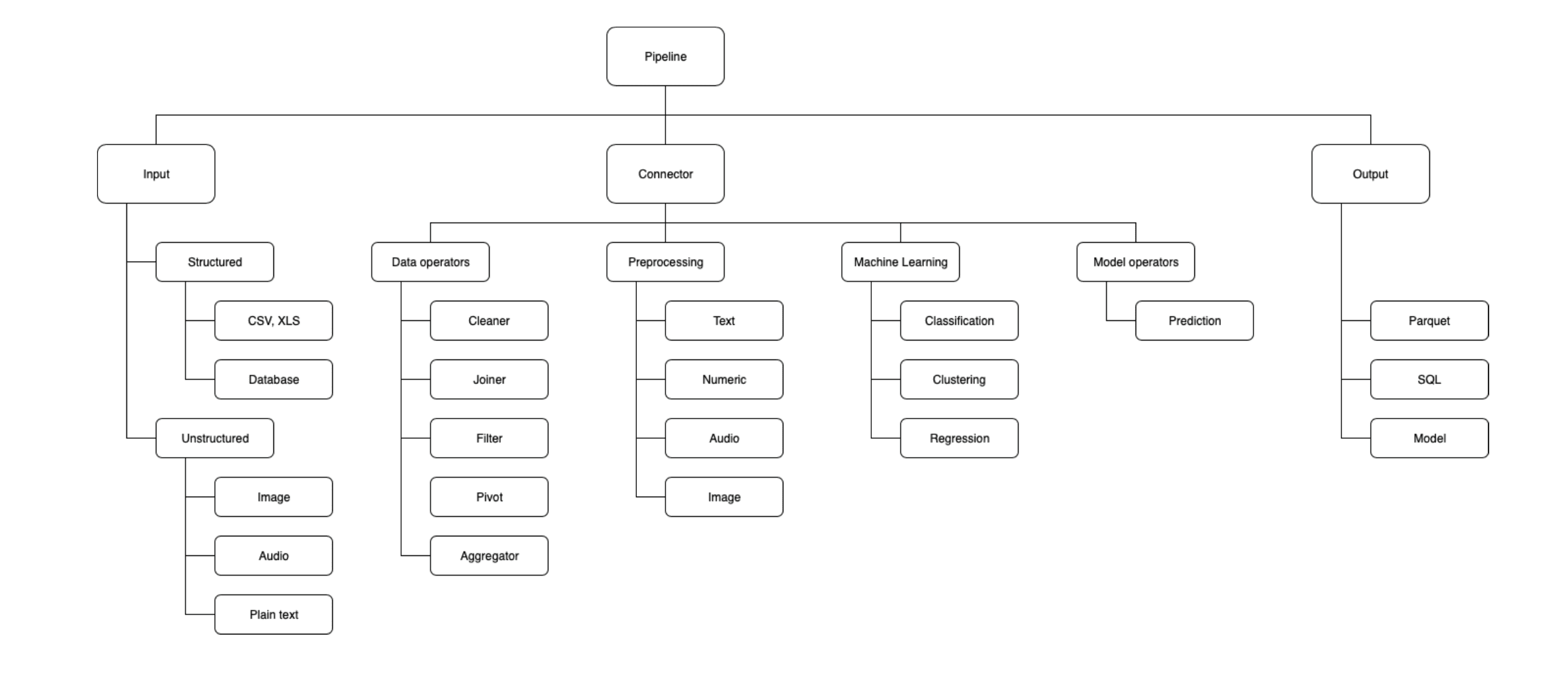
Prepare an IA diagram
To align the team around a shared understanding of the product’s scope, I created an information architecture diagram to illustrate how data flows through the entire pipeline; from input sources to output formats. This diagram helped stakeholders, designers, and engineers visualize the core modules, their relationships, and the functional breakdown of each stage (e.g., data operators, preprocessing, machine learning). It also served as a foundational reference for planning the UI, defining priorities, and ensuring technical feasibility as we merged features from ML Studio into a unified Data Pipeline experience.
Wireframes
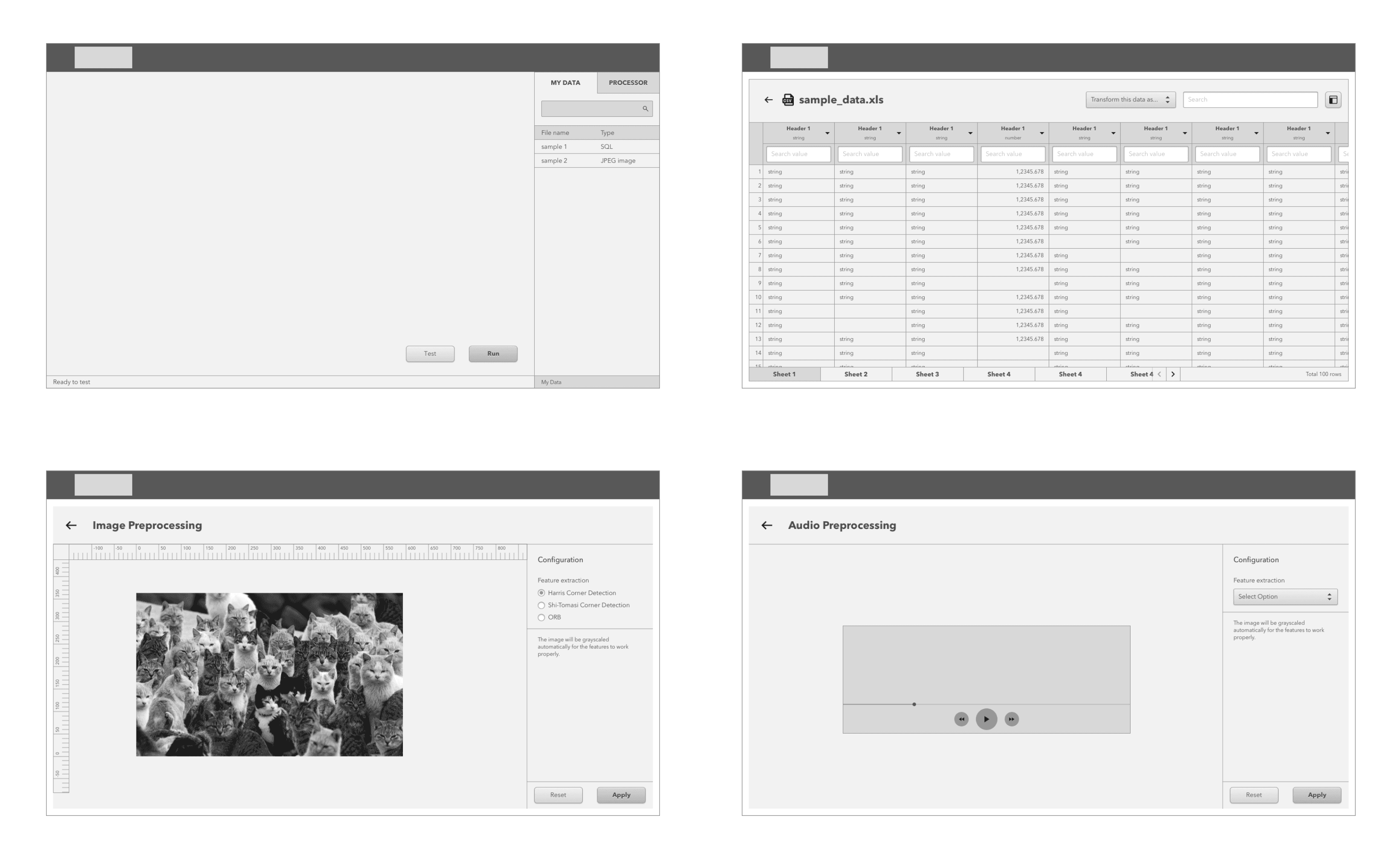
I sketched early layout concepts in a sketchbook and translated them into wireframes for the Business Requirement Document, which stakeholders used to approve the project. Once approved, I designed the high-fidelity screens and handed them off to engineers for implementation.
Development
Interaction flow
I looked for a way to represent each screen and its respective functions in a way that would benefit the development team and decided to create an interaction flow. This helped me visualize the design more clearly, allowed me to receive stakeholder feedback faster, and in turn supported the engineering team in understanding the interaction of each component.
03
Result
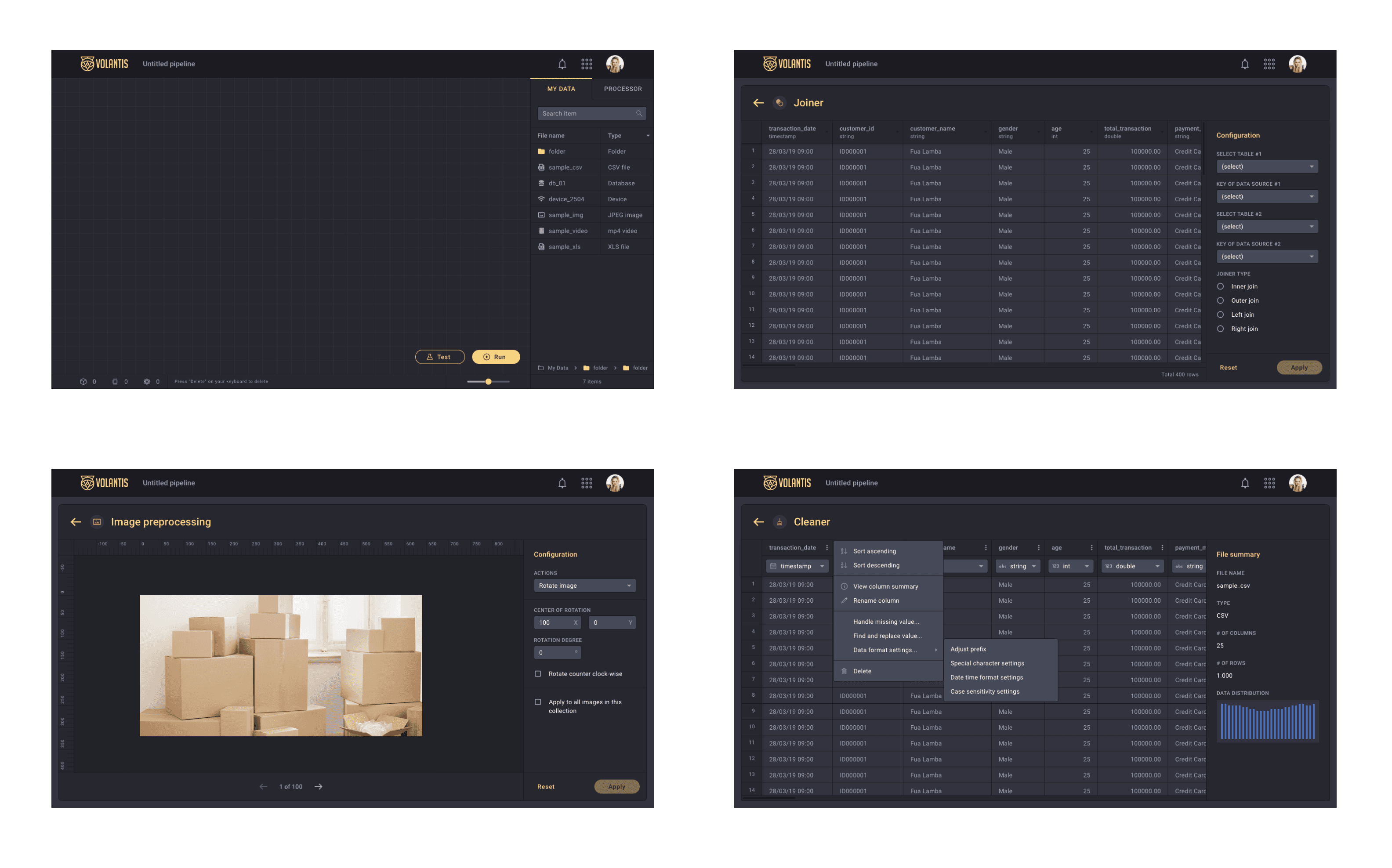
I delivered the design for Data Pipeline within days, and the product was fully implemented and ready for beta testers in less than two months. Following Volantis’s brand identity—dark theme with light gold accents—the final product included the following key features:
Data preprocessing: cleaning and preparing raw inputs
Data transformation: applying joiners, filters, and enrichment
Model creation and training: building ML models from processed data
Testing and application: evaluating and deploying trained models
04
Conclusion
Outcome
We successfully launched the beta version within a few weeks of development; however, the overall outcome could not be fully measured due to a company-wide downsizing that affected the team, including myself.
As of 2025, Volantis continues to maintain Data Pipeline as one of their core products, now known as Volantis Business Process Design.
Lesson learned
Accelerating design speed
This was the first high-complexity project I had worked on, and it needed to be completed within just a few days amid many unknown factors. Despite these challenges, I applied multiple UX research approaches to deliver the initial concept. Effective time management was critical, as I had to quickly understand users, technical constraints, business goals, competitors, and the final design vision. Although I didn’t have the opportunity to further iterate on the product, this project was instrumental in accelerating my speed and problem-solving as a designer.
First experience as a product designer
I didn’t realize until later that this project would be my first real experience as a product designer. At Volantis, my official role was UX designer, but this complex project required me to take on many responsibilities: from project kick-off and requirement gathering, to conducting UX research, designing high-fidelity interfaces, collaborating with product and engineering, and aligning with business goals, KPIs, and technical feasibility. This experience gave me a comprehensive understanding of end-to-end product design and shaped my approach to leading complex design projects.